
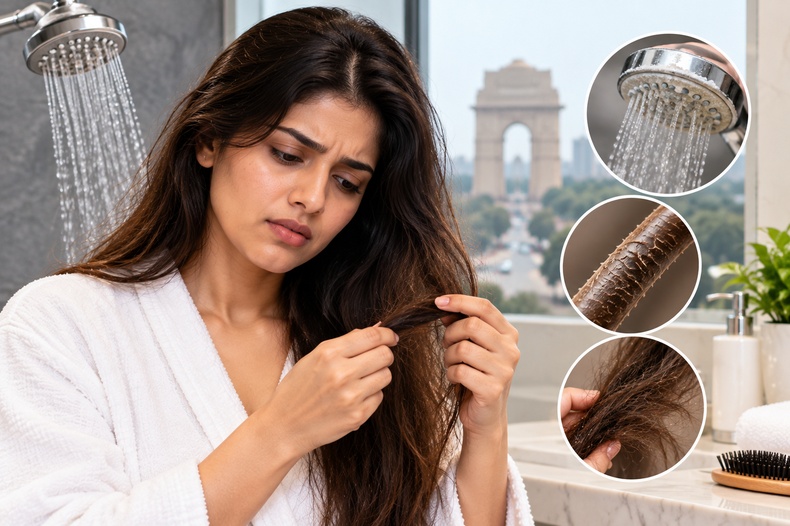
Delhi’s Hard Water Hair Problem: How to Protect Your Hair from Damage
Delhi’s water quality can be a concern for many people, especially when it comes to regular hair care. Hard water contains minerals such as calcium and magnesium that can build up on the scalp and hair strands. Over time, this buildup may leave hair dry, rough, dull and difficult to manage. For some people, repeated exposure may also contribute to scalp irritation and increased breakage, making hard water hair loss a common concern. Fortunately, a consistent hard water hair care routine and the right professional treatments can help protect your hair. In this guide, we will discuss the signs of hard water hair damage, practical prevention tips and when you should consider professional care.
What Is Hard Water and How Does It Affect Hair?
Hard water has a higher concentration of dissolved minerals. When you wash your hair frequently with it, these minerals can remain on the scalp and hair shaft.
This buildup may interfere with shampooing and conditioning, leaving your hair feeling less clean even after washing. Common effects include:
• Dry and rough hair
• Dull or lifeless appearance
• Increased tangling
• Frizzy texture
• Split ends and breakage
• Scalp dryness or irritation
While hard water does not directly cause permanent hair loss in everyone, ongoing dryness, breakage and scalp problems can make hair appear thinner.
Signs of Hard Water Hair Damage
Identifying the problem early can make hair care easier. You may be experiencing hard water-related damage if your hair:
Feels Dry After Washing
If your hair feels unusually dry or straw-like shortly after shampooing, mineral buildup may be affecting moisture retention.
Looks Dull and Lifeless
Mineral deposits can form a layer over the hair shaft, reducing its natural shine and making coloured hair appear less vibrant.
Becomes Difficult to Manage
Persistent tangling, roughness and frizz can indicate that the hair cuticle is not receiving adequate moisture and conditioning.
Shows More Breakage
Weak, dry strands can break more easily while brushing or styling. This may sometimes be confused with hard water hair loss.
How to Protect Your Hair from Hard Water
You do not necessarily need to stop washing your hair. Instead, make a few changes to your regular routine.
1. Use a Shower Filter
Installing a suitable shower filter can help reduce certain impurities in your bathing water. It can be a useful first step if you regularly notice dryness after washing.
2. Choose a Clarifying Shampoo
A clarifying shampoo can help remove product and mineral buildup. However, avoid overusing it because excessive cleansing can make already-dry hair feel even more dehydrated.
3. Condition Your Hair Properly
Use a moisturising conditioner after shampooing, concentrating on the lengths and ends. A weekly nourishing hair mask can provide additional moisture.
4. Avoid Excessive Heat Styling
Frequent use of straighteners, curling irons and high-heat blow-drying can worsen existing dryness. Use heat protection and keep the temperature moderate.
5. Get Regular Professional Hair Care
If home care is not improving the condition of your hair, professional cleansing, conditioning and nourishing services may help restore its appearance and manageability.
When Should You Consider Hard Water Hair Treatment?
If your hair remains rough, dry or difficult to manage despite changing your routine, professional hard water hair treatment may be worth considering.
A salon professional can assess your hair condition and recommend suitable cleansing, conditioning or restorative services. The treatment should be selected according to your hair texture, scalp condition and extent of damage rather than using the same approach for everyone.
If you are experiencing noticeable hair thinning or excessive shedding, remember that it may have several causes. Hard water should not automatically be considered the only reason. A dermatologist or qualified hair specialist can help identify the underlying issue.
Is Hard Water Hair Loss Permanent?
The term hard water hair loss can be misleading. Mineral buildup may contribute to dryness and breakage, which can make hair look thinner. However, significant hair shedding can also be related to genetics, nutritional deficiencies, hormonal changes, stress, scalp conditions and other factors.
Therefore, protecting your hair from hard water is helpful, but persistent hair fall deserves proper evaluation.
Best Solution for Damaged Hair: A Consistent Routine
There is no single best solution for damaged hair. Healthy-looking hair usually requires a combination of proper cleansing, hydration, gentle handling and professional care when necessary.
A practical routine can include:
1. Filtered or treated bathing water where possible.
2. A suitable shampoo according to your scalp type.
3. Regular conditioning and deep nourishment.
4. Limited chemical and heat treatments.
5. Regular trimming to manage split ends.
6. Professional assessment when damage or hair fall persists.
Professional Hair Care at Welefull Unisex Salon
Protecting your hair from Delhi’s hard water starts with understanding what your hair actually needs. At Welefull Unisex Salon, professional hair care can complement your regular home routine and help you maintain smoother, healthier-looking and more manageable hair. If dryness, roughness or breakage has become a regular concern, consult our salon professionals for suitable hair care options.
Friquently Asked Questions (FAQ's)
1. Can hard water damage hair?
Yes. Regular exposure to mineral-rich hard water can contribute to buildup, dryness, roughness, dullness and increased breakage.
2. Does hard water cause hair loss?
Hard water is not considered a direct cause of permanent hair loss for everyone. However, buildup, dryness and breakage can make hair appear thinner.
3. How can I protect my hair from hard water?
Using a shower filter, clarifying shampoo occasionally, moisturising conditioner and nourishing hair treatments can help manage the effects.
4. How often should I use clarifying shampoo?
It depends on your hair and scalp. Overuse can cause dryness, so follow the product instructions or ask a professional for personalised advice.
5. Can salon treatments repair hard water damage?
Professional cleansing and conditioning treatments can improve the feel and appearance of damaged hair, although severely damaged strands may still need trimming.